


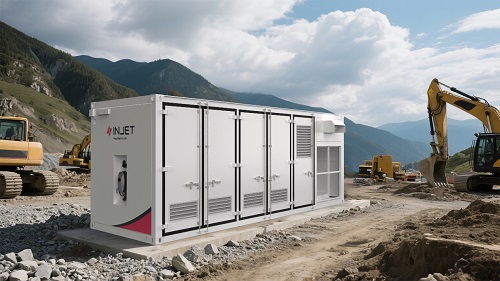
Industrial ESS Storage (Industrial Energy Storage System) is becoming an important solution for companies seeking better control over electricity usage, energy costs, and power reliability.
With increasing electricity demand, renewable energy integration, and pressure on industrial power management, more factories, commercial buildings, and infrastructure operators are evaluating energy storage systems as part of their long-term energy strategies.
An industrial ESS storage system typically combines:
Battery modules
Battery management system (BMS)
Energy management system (EMS)
Power conversion system (PCS)
Thermal management system
Safety protection components
INJET New Energy provides energy storage solutions designed for commercial and industrial applications, helping businesses optimize energy usage and improve energy flexibility.
Website:
Phone:
+86-18980902801
Email:
Electricity prices and demand charges are major operational costs for many industrial users.
Industrial ESS storage can help businesses manage energy consumption through:
Peak shaving
Load shifting
Energy scheduling
During periods of high electricity demand, stored energy can support facility operations and reduce dependence on expensive peak electricity periods.
Many companies are installing:
Solar photovoltaic systems
Wind power systems
Distributed energy resources
However, renewable energy generation depends on weather conditions.
Energy storage allows businesses to:
Store excess renewable energy
Use stored power when needed
Improve renewable energy utilization
This creates a more flexible energy management approach.
Industrial facilities often require stable electricity supply.
Power interruptions may affect:
Production schedules
Manufacturing equipment
Data systems
Industrial processes
Industrial ESS storage can provide backup energy support and help maintain critical operations during power fluctuations.
The battery system is the core energy storage component.
Industrial ESS storage systems commonly use lithium battery technologies because they offer:
High energy density
Long cycle performance
Flexible installation options
Battery configuration depends on:
Required capacity
Power demand
Application scenario
The BMS monitors and manages battery operation.
Its functions include:
Battery status monitoring
Voltage management
Temperature monitoring
Safety protection
A suitable BMS helps improve system operation stability.
The PCS manages energy conversion between batteries and electrical systems.
It enables:
AC/DC conversion
Charging control
Discharging management
Grid interaction
The PCS is an important connection point between energy storage systems and industrial power networks.
The EMS controls how stored energy is used.
Functions include:
Energy monitoring
Operation scheduling
Load management
Data analysis
Through intelligent management, businesses can optimize energy usage according to operating conditions.
Manufacturing facilities often have large and continuous electricity demand.
Industrial ESS storage can support:
Production facilities
Assembly plants
Processing factories
Applications include:
Peak demand management
Energy cost optimization
Emergency power support
Commercial properties such as office buildings and shopping centers may use ESS storage to improve energy management.
Typical applications include:
HVAC energy management
Building load balancing
Renewable energy integration
Energy storage is often combined with solar power systems.
The combination allows:
Daytime solar energy storage
Nighttime electricity usage
Improved renewable energy utilization
Industrial ESS storage plays an important role in microgrid systems.
Microgrids may include:
Solar generation
Energy storage
Local loads
Energy management systems
ESS storage helps coordinate different energy sources.
Energy capacity determines how much electricity the system can store.
Power output determines how much electricity the system can deliver at a specific time.
Before purchasing, companies should evaluate:
Daily electricity consumption
Peak load requirements
Backup power needs
Safety is a key consideration for industrial energy storage.
Important system features include:
Battery monitoring
Temperature control
Protection systems
Fault detection
A complete safety design involves multiple protection layers.
Temperature affects battery performance and service conditions.
Industrial ESS storage systems may use:
Air cooling
Liquid cooling
The suitable cooling method depends on:
System size
Installation environment
Operating conditions
Industrial energy requirements may change over time.
A scalable ESS solution allows businesses to consider:
Future capacity expansion
Additional battery modules
Changing energy requirements
A professional supplier should understand complete energy storage solutions.
Important capabilities include:
Battery system integration
Energy management design
Project requirement analysis
Buyers should compare:
Battery technology
System capacity
Safety functions
Communication interfaces
The configuration should match the actual application.
Industrial projects require technical coordination.
Important support includes:
System commissioning
Operation guidance
Maintenance support
Technical communication
Many companies are exploring behind-the-meter energy storage solutions.
The main drivers include:
Electricity cost management
Renewable energy adoption
Grid flexibility requirements
Modern ESS systems increasingly connect with digital management platforms.
Smart energy management enables:
Real-time monitoring
Remote operation
Data-based optimization
Industrial users are looking for energy solutions that help them manage:
Energy costs
Power reliability
Sustainability goals
This is driving demand for commercial and industrial ESS storage systems.
INJET New Energy focuses on energy technology solutions, including energy storage systems for commercial and industrial applications.
The company provides integrated solutions combining:
Energy storage technology
Power electronics
Intelligent energy management
Industrial energy requirements vary by industry.
INJET New Energy provides solutions suitable for:
Manufacturing facilities
Commercial buildings
Renewable energy projects
Energy management applications
Energy storage technology is becoming an important part of modern energy infrastructure.
INJET New Energy continues developing energy solutions to support businesses seeking more flexible and efficient energy management.
| Item | Key Consideration |
|---|---|
| Application | Factory, commercial building, renewable project |
| Energy Capacity | Required storage amount |
| Power Output | Peak electricity demand |
| Battery System | Battery technology and configuration |
| Safety System | Monitoring and protection functions |
| EMS Function | Energy management capability |
| Expansion | Future capacity requirements |
Industrial ESS Storage, Industrial Energy Storage System, Commercial Energy Storage System, C&I Energy Storage Solution, Battery Energy Storage System, Industrial Battery Storage, Energy Storage Cabinet, Factory Energy Storage Solution, Renewable Energy Storage System, ESS Storage Manufacturer