


Construction sites often operate under power conditions that differ from those of permanent industrial facilities. A project may have limited grid access, changing equipment loads, temporary working areas, or a power demand that varies throughout the day.
For contractors and project operators, relying entirely on diesel generators can create challenges involving fuel logistics, generator operating schedules, maintenance, noise, and operating costs. Connecting to the utility grid may also be impractical for remote or temporary projects.
Hybrid energy storage for construction sites offers an alternative approach by coordinating battery storage with available power sources such as solar PV, diesel generators, and the utility grid where accessible.
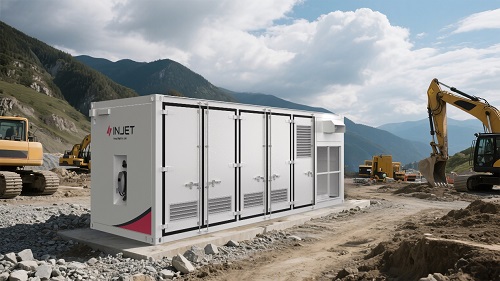
INJET HanCang provides hybrid energy storage solutions designed for temporary power applications. Its product range includes 261kWh and 522kWh systems that integrate energy storage with coordinated power management for construction, infrastructure, and other demanding applications.
The appropriate configuration depends on the project's load profile, required operating hours, available energy sources, and site conditions. Understanding these factors is the first step toward selecting a suitable temporary power solution.
Temporary construction projects rarely maintain a constant electricity demand. Equipment may start and stop throughout the day, while different work stages can create substantial changes in power requirements.
A power strategy designed around the actual project can help operators manage these variations more effectively.
Construction equipment does not always consume power at a constant rate. Pumps, compressors, welding equipment, and other electrical loads may have different operating patterns and startup requirements.
If a generator is selected only according to average demand, it may struggle when several loads operate simultaneously or when equipment requires a high starting current.
A battery energy storage system can help manage selected short-duration load variations, provided its power rating, inverter capability, and overload characteristics match the application.
A generator may spend significant periods operating below its preferred loading range when the site's demand is relatively low. Actual fuel consumption depends on the generator model, load level, operating condition, and maintenance status.
A hybrid system can coordinate battery charging, discharging, and generator operation according to site demand. This may help avoid unnecessary generator runtime in suitable applications, but the actual fuel savings must be evaluated using the project's operating data.
Road construction, bridge projects, remote infrastructure, and temporary worker camps may have limited or unavailable utility connections.
In these situations, a hybrid system can combine battery storage with solar generation and backup diesel power. The configuration must be designed around the site's energy demand and the availability of each power source.
Remote projects may face additional costs and operational risks when fuel must be transported over long distances.
Battery storage does not eliminate every requirement for fuel or maintenance. However, when integrated appropriately with other energy sources, it can help operators coordinate generator usage and reduce avoidable operating periods.
A hybrid construction power system can coordinate several components:
Battery energy storage: Stores electrical energy and supplies power when required.
Solar PV: Provides renewable electricity when solar generation is available.
Diesel generator: Supplies power when other sources cannot meet demand.
Utility grid, where available: Provides an additional power source.
Power conversion system: Manages electrical power conversion and delivery.
Energy management system: Coordinates energy sources according to operating conditions and configured control strategies.
The exact architecture depends on the application and selected equipment.
When solar generation is available, PV electricity can supply connected loads and charge the battery if the system has sufficient generation and charging capacity.
This allows the project to use available solar energy rather than relying exclusively on generator power.
Some equipment may require a high starting current or experience a short-duration demand peak.
The battery system and power conversion equipment must be capable of handling the relevant load characteristics. If the required startup power exceeds the system's capability, the equipment may still need a different configuration or additional power support.
For this reason, load-starting requirements should be assessed during system design rather than assumed to be supported by battery capacity alone.
If site demand drops, the energy management system can coordinate available power sources according to the configured operating strategy.
Where operating conditions allow, the system may use lower-demand periods to charge the battery or adjust generator operation.
Solar output changes with weather, time of day, and installation conditions. Battery storage can support loads when solar generation decreases, provided sufficient energy remains available.
When stored energy is insufficient to meet demand, a properly configured hybrid system can use the diesel generator or another available source.
The objective is to coordinate the available sources while maintaining the required power supply for the project.
Reducing generator fuel consumption requires more than adding a battery. The system must be configured around the generator, battery, loads, and actual site operating schedule.
A generator that runs continuously may consume fuel even when the site's demand is relatively low. A hybrid control strategy can evaluate when generator operation is needed and when stored energy can support the load.
Whether this approach is practical depends on generator operating limits, battery capacity, minimum loading requirements, and the project's power demand.
Battery storage can provide power during selected high-demand periods, helping reduce the need to size a generator around every short-duration peak.
However, battery power output and overload capability must be checked against the actual equipment startup and operating requirements.
The system designer should consider both the maximum power demand and the duration of that demand.
Solar PV can contribute electricity during daylight hours. The amount of usable solar energy depends on local weather, system orientation, available installation area, and the project's consumption profile.
A hybrid system can coordinate PV generation with battery charging and generator operation. For projects with suitable solar resources, this may reduce the amount of energy that must be supplied by diesel generation.
To determine whether a hybrid system is improving project performance, operators should track relevant operating data, including:
Generator operating hours
Fuel consumption
Average and peak electrical loads
Battery charging and discharging
Solar generation, where installed
Power interruptions and system alarms
Comparing these measurements before and after deployment can help determine the actual operational impact.
Fuel savings should be calculated from real project data rather than assumed from battery capacity alone.
Selecting the correct system requires both power and energy calculations. These are related but different parameters.
The power rating determines how much electrical power the system can supply at a given time.
Start by listing the equipment that may operate simultaneously. Include normal running power, startup demand, and any loads that must remain operational during a power interruption.
The design should also account for three-phase requirements, power factor, and other electrical characteristics where applicable.
Energy capacity is commonly expressed in kilowatt-hours (kWh). Estimate how much energy the project uses over a typical working day and identify the periods when demand is highest.
A site with a relatively low average load but high short-duration peaks may require a different power-to-energy configuration from a site with steady demand over long operating hours.
Decide how long the system needs to support designated loads without relying on the primary power source.
The required duration depends on the critical loads, expected interruption period, battery operating limits, and available backup generation.
Not every piece of construction equipment needs the same level of backup. Identifying priority loads can help the project develop a more practical design.
If solar PV is planned, estimate the expected generation under local conditions. For the diesel generator, review rated output, minimum loading requirements, fuel consumption characteristics, and compatibility with the proposed hybrid system.
These details help determine whether the battery should primarily provide backup power, manage peaks, absorb renewable energy, or perform several functions.
Construction environments may expose equipment to dust, temperature variations, vibration, rain, and frequent relocation.
Before selecting an outdoor energy storage system, verify the required environmental protection, thermal management, installation clearances, transportation arrangements, and applicable electrical safety requirements.
The final capacity should be based on the complete project specification rather than a general rule of thumb.
INJET HanCang includes different energy storage capacities for different project requirements. The correct choice depends on both the required energy capacity and the system's power output.
The HanCang 261kWh system is positioned as a compact hybrid power solution integrating PV, battery storage, diesel generation, grid connectivity, and intelligent dispatching.
It can be evaluated for applications such as:
Smaller or distributed construction sites
Remote infrastructure projects
Temporary power installations
Telecommunications sites
Off-grid facilities with suitable load requirements
Its suitability should be determined by the project's peak power, daily energy consumption, operating duration, and equipment startup requirements.
The HanCang 522kWh system provides a larger energy capacity and is positioned for applications including construction projects, bridge projects, emergency power, and hybrid microgrids.
It may be worth evaluating when a project requires more stored energy or longer operating support than a smaller configuration can provide.
However, a larger battery does not automatically mean that the system can support every load. Buyers should also compare rated power, output characteristics, control functions, and the requirements of the connected equipment.
Evaluation Item | Why It Matters |
|---|---|
Energy capacity (kWh) | Indicates the amount of stored energy available within operating limits |
Rated power (kW) | Determines the power the system can deliver |
Overload capability | Helps assess short-duration demand peaks and equipment startup |
Charging options | Determines compatibility with solar, grid, and generator power |
Operating mode | Must match grid-connected, weak-grid, or off-grid requirements |
Environmental conditions | Affects installation and equipment selection |
Monitoring and controls | Supports operational oversight and system management |
For a project quotation, the engineering team should review the full electrical load list and operating profile before recommending a configuration.
Hybrid storage can serve different roles depending on the project environment.
Road and bridge projects may move through different work zones as construction progresses. Grid access can be limited, and the equipment operating schedule may change between project stages.
A hybrid power system can be evaluated for temporary power supply, load management, and coordination between available energy sources.
Temporary worker camps may require power for lighting, water systems, communications, and other essential loads.
The system should be sized around daily energy demand, peak loads, and the required supply duration. If solar generation is available, battery storage can help shift energy from daytime generation to periods of higher demand.
Remote industrial projects may face challenging fuel logistics and limited utility infrastructure.
A hybrid system can be considered where the project requires coordinated power from storage and backup generation. Equipment selection should account for environmental conditions, operating schedules, electrical loads, and applicable site safety requirements.
Emergency response and temporary infrastructure projects may need power equipment that can be deployed and configured for changing site requirements.
The appropriate solution depends on the load type, required operating duration, available fuel and renewable resources, transportation constraints, and the project's emergency power plan.
For B2B buyers, providing project details at the beginning can make technical evaluation more efficient.
Before contacting a supplier, prepare the following information:
Project location: Country, climate, and site environment.
Application: Construction, bridge work, worker camp, remote industry, or another use.
Grid availability: Whether the site is grid-connected, weak-grid, or off-grid.
Load list: Equipment ratings and expected simultaneous operation.
Startup demand: Motors or equipment with high inrush current.
Daily operating schedule: Working hours and periods of peak demand.
Backup requirements: Loads that must remain powered and the required duration.
Available energy sources: Solar PV, diesel generator, utility grid, or other sources.
Deployment requirements: Fixed installation, temporary installation, or frequent relocation.
If detailed electrical data is not yet available, an initial load list and project description can help begin the discussion. Final system selection should follow technical review.
It depends on the load demand, required operating duration, available charging sources, and system configuration. In many temporary power applications, a hybrid system combines battery storage with diesel generation rather than removing the generator entirely.
It can help reduce generator operating time in suitable applications by coordinating battery storage, solar generation, and generator operation. Actual fuel savings depend on the load profile, generator characteristics, system controls, and operating strategy, so they should be verified through project measurements.
The required capacity depends on daily energy demand, peak loads, backup duration, and available charging sources. Both kWh capacity and kW power output must be considered when selecting a system.
A system designed for off-grid operation can coordinate available sources such as battery storage, solar PV, and diesel generation. Buyers should confirm the supported operating modes and the required equipment configuration.
Potentially, if the power conversion system and battery are designed to meet the equipment's startup requirements. Buyers should provide motor ratings, startup characteristics, and expected simultaneous loads for technical evaluation.
The primary stated difference is energy capacity. However, the right choice also depends on rated power, load requirements, operating duration, and system configuration. Buyers should review the relevant product specifications before selecting a model.
Provide the project location, application, load list, grid conditions, expected operating hours, backup requirements, available power sources, and deployment constraints. These details help the supplier assess the appropriate configuration.
INJET HanCang provides hybrid energy storage solutions for temporary power, construction, infrastructure, remote sites, and other applications requiring coordinated power management.
For projects with limited grid access or variable electrical loads, our team can review the project requirements and discuss a suitable system configuration based on the available technical information.
To help us evaluate your project, share the location, application, load list, expected operating hours, available power sources, and required backup duration.
Explore the HanCang 261kWh Energy Storage System, the HanCang 522kWh Energy Storage System, or our Off-Grid Microgrid Solutions for Islands and Remote Areas.
Contact INJET to discuss hybrid energy storage for your next construction or temporary power project.
Hot Tags: hybrid energy storage for construction sites, construction site battery energy storage, temporary power system for construction sites, solar battery diesel hybrid power system, reduce diesel generator fuel consumption on construction sites, off-grid construction site power solution, hybrid power system for construction equipment